
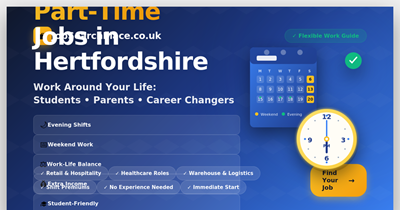
Part-Time Jobs in Hertfordshire: Evening and Weekend Opportunities
26th Mar 2026
Introduction
Part-time employment in Hertfordshire offers valuable opportunities for individuals seeking flexibility in their working arrangements. Evening and weekend positions provide practical solutions for students, parents, carers, and those balancing multiple responsibilities. The county's diverse economy supports numerous part-time roles across retail, hospitality, healthcare, logistics, and professional services.
Understanding the local part-time job market helps jobseekers identify suitable opportunities that align with their availability and skills. Hertfordshire's proximity to London, combined with its strong local economy, creates demand for part-time workers in various sectors. Evening and weekend positions often carry premium rates, making them financially attractive for those seeking supplementary income or flexible working patterns.
This guide examines part-time employment opportunities across Hertfordshire, focusing on evening and weekend positions. We explore key sectors, major employers, salary expectations, job search strategies, and practical considerations for part-time workers.
Understanding Part-Time Employment in Hertfordshire
Part-time work typically involves contracted hours below the standard full-time threshold of 35 to 40 hours per week. In Hertfordshire, part-time positions range from minimal hours contracts offering flexibility to regular patterns providing consistent income. Evening shifts generally span between 6pm and midnight, while weekend work covers Saturday and Sunday across various time slots.
The county's economic structure supports substantial part-time employment. Major towns including Watford, St Albans, Stevenage, Hemel Hempstead, and Welwyn Garden City host numerous businesses requiring part-time staff. Retail parks, leisure complexes, healthcare facilities, and distribution centres operate extended hours, creating ongoing demand for evening and weekend workers.
Part-time employment serves multiple purposes for different groups. Students access income whilst pursuing education, parents coordinate work around childcare responsibilities, and individuals supplement primary income through additional hours. Some workers prefer part-time arrangements for lifestyle reasons or during career transitions. Understanding your motivations helps target appropriate opportunities.
Key Sectors Offering Part-Time Evening and Weekend Work
Retail Sector
Hertfordshire's retail landscape provides extensive part-time opportunities. Large shopping centres including the Galleria in Hatfield, Intu Watford, and St Albans Maltings require staff for extended trading hours. Supermarkets operate seven days weekly with evening trading, creating consistent demand for checkout operators, shelf stackers, customer service assistants, and department specialists.
Fashion retailers, electronics stores, homeware shops, and specialist outlets require weekend coverage during peak shopping periods. Many positions offer flexible contracts allowing workers to specify availability. Premium retail brands often provide competitive hourly rates, staff discounts, and structured progression opportunities for reliable part-time employees.
Retail roles suit those developing customer service skills, seeking social work environments, or requiring variable hour patterns. Evening and weekend shifts frequently attract shift premiums, increasing overall earnings. Many retailers offer additional hours during seasonal peaks, providing income boosts during holiday periods.
Hospitality and Catering
Hertfordshire's hospitality sector relies heavily on part-time evening and weekend staff. Restaurants, pubs, hotels, and entertainment venues require servers, bartenders, kitchen assistants, and housekeeping personnel. The county's visitor economy, combined with local dining culture, sustains year-round demand for hospitality workers.
Chain restaurants and independent establishments alike seek reliable part-time staff. Popular dining areas in St Albans, Hertford, Berkhamsted, and Bishop's Stortford maintain busy evening services. Hotel operations, particularly near major transport links and business districts, require weekend reception, housekeeping, and food service coverage.
Hospitality roles often provide tips supplementing hourly rates, making total earnings competitive. Many positions offer meal allowances and flexible scheduling. The sector provides valuable experience in customer interaction, fast-paced environments, and team working, all transferable to other industries.
Healthcare and Social Care
Healthcare provision across Hertfordshire creates substantial part-time opportunities. Care homes, hospitals, community health services, and domiciliary care providers require staff across all hours. Evening and weekend shifts prove essential for continuous care provision, particularly in residential and nursing facilities.
Healthcare assistant roles, support worker positions, and auxiliary nursing jobs frequently operate on part-time contracts. Many providers offer bank arrangements allowing workers to select shifts matching their availability. The sector particularly suits those seeking meaningful work contributing to community wellbeing.
Healthcare roles often require specific qualifications or willingness to undertake training. However, many employers provide necessary certifications to suitable candidates. Pay rates generally exceed minimum wage, with unsocial hours premiums for evening, night, and weekend work. Career progression opportunities exist for committed workers willing to develop their skills.
Leisure and Entertainment
Hertfordshire's leisure facilities generate regular part-time employment. Gyms, cinemas, bowling alleys, soft play centres, and sports venues operate predominantly during evenings and weekends when customers have free time. These environments suit energetic individuals comfortable in active, customer-facing roles.
Fitness centres require reception staff, gym instructors, class leaders, and cleaning personnel. Entertainment venues need customer service representatives, ticket sales staff, and facilities assistants. Many positions suit students or those seeking active work environments rather than traditional office settings.
The leisure sector offers variety and social interaction. Some roles provide free facility access as employment benefits, appealing to fitness enthusiasts or families. Weekend working proves standard in this sector, making it ideal for those specifically seeking non-weekday employment.
Logistics and Distribution
Hertfordshire's strategic location supports significant logistics operations. Distribution centres and warehouses operate extended hours including evenings and weekends, particularly serving online retail demand. Part-time warehouse operative, picker-packer, and goods handling positions provide physically active work with clear task structures.
Major logistics employers including Amazon, Royal Mail, and various supermarket distribution centres maintain facilities across Hertfordshire. These operations require flexible workforce capacity, creating numerous part-time opportunities. Shift patterns vary, with some workers preferring regular weekend schedules whilst others select variable hours.
Warehouse work often pays above minimum wage with evening and weekend shift premiums. Roles suit those preferring structured, physical work without extensive customer interaction. Many positions require minimal prior experience, with employers providing necessary training. Career advancement opportunities exist for reliable workers demonstrating capability.
Professional and Administrative Services
Growing numbers of professional organisations offer part-time arrangements including evening and weekend coverage. Call centres, IT support services, financial institutions, and customer service operations extend availability beyond traditional office hours. These roles suit qualified individuals seeking part-time professional employment.
Evening customer service roles, weekend IT support positions, and flexible administrative work provide alternatives to manual or hospitality labour. Such positions often offer better hourly rates and comfortable working conditions. They suit those with office experience seeking reduced hours or supplementary income utilising existing skills.
Professional part-time work increasingly accommodates remote working, allowing employees to work from home. This flexibility particularly benefits those balancing childcare, study, or other commitments. Many employers value experienced workers willing to cover unsocial hours, creating opportunities for career professionals seeking part-time arrangements.
Major Employers and Recruitment Patterns
Several large employers dominate Hertfordshire's part-time employment market. National retailers including Tesco, Sainsbury's, Marks & Spencer, Next, and Primark maintain multiple locations requiring ongoing part-time recruitment. Hospitality chains such as Wetherspoons, Nando's, and Pizza Express regularly advertise part-time positions.
Healthcare providers including NHS trusts, private care home operators like HC-One and Care UK, and domiciliary care agencies continuously recruit part-time staff. Leisure operators including David Lloyd, PureGym, and Odeon Cinemas maintain regular recruitment. Logistics companies particularly Amazon, DHL, and supermarket distribution centres recruit part-time workers throughout the year.
Understanding major employer recruitment patterns helps target applications effectively. Many large employers operate continuous recruitment, accepting applications even without advertised vacancies. Building relationships with recruitment agencies specialising in part-time placements increases access to opportunities as they arise.
Salary Expectations and Pay Rates
Part-time evening and weekend work in Hertfordshire typically pays between the National Living Wage minimum and competitive premium rates depending on sector, role complexity, and employer. Entry-level retail and hospitality positions often start at or slightly above minimum wage, currently set at varying rates by age bracket.
Shift premiums commonly apply to evening, night, and weekend work. Enhancements typically range from 10% to 50% above standard hourly rates, with Sunday working often commanding highest premiums. Healthcare roles frequently pay above baseline rates, with experienced care workers earning between £11 and £14 per hour. Logistics positions often offer £11 to £13 hourly, with night shifts potentially exceeding £15.
Professional part-time roles command higher rates reflecting skill requirements. Customer service, administrative, and technical positions may pay £12 to £18 per hour or more. Some employers offer pro-rata benefit packages for regular part-time workers including pension contributions, holiday entitlement, and sick pay beyond statutory minimums.
Understanding total earning potential requires considering base pay, shift premiums, overtime opportunities, and additional benefits. Calculating weekly or monthly earnings based on available hours provides realistic financial planning. Many part-time workers combine multiple roles or flexible arrangements to achieve desired income levels.
Effective Job Search Strategies
Successful part-time job hunting requires targeted approaches recognising different recruitment methods. Online job boards including Indeed, Reed, and Totaljobs feature extensive part-time listings. Filtering searches by hours, location, and sector streamlines the process. Setting job alerts ensures immediate notification of suitable vacancies.
Company websites often advertise positions before external boards. Regularly checking major employer career pages identifies opportunities early. Many organisations accept speculative applications or maintain talent pools for future vacancies. Direct approaches demonstrate initiative and may result in positions not publicly advertised.
Recruitment agencies specialising in part-time, temporary, and flexible work provide valuable resources. Agencies maintain relationships with multiple employers, accessing vacancies across sectors. Registering with several agencies increases exposure to opportunities. Some agencies specialise in particular sectors like healthcare or hospitality, offering targeted support.
Local job centres provide free employment support including vacancy searches, application assistance, and interview preparation. Advisers understand local labour markets and can identify suitable opportunities. Community noticeboards in libraries, supermarkets, and leisure centres sometimes feature local part-time vacancies not advertised online.
Networking proves effective for part-time job hunting. Informing friends, family, and acquaintances of job seeking often generates leads. Many positions fill through word-of-mouth recommendations before formal advertising. Social media platforms, particularly local community groups, frequently feature job postings and employment discussions.
Application and Interview Preparation
Part-time job applications require the same professionalism as full-time positions. CVs should clearly state availability, highlighting flexibility where possible. Emphasising relevant skills, reliability, and enthusiasm demonstrates suitability despite potentially limited hours. Tailoring applications to specific roles and employers increases success rates.
Cover letters or supporting statements should explain motivations for part-time work positively. Rather than focusing on limitations, emphasise the value and commitment you offer. Highlighting how your circumstances enable reliability during required hours strengthens applications. Mentioning specific availability demonstrates practical consideration.
Interview preparation involves researching employers, understanding role requirements, and preparing examples demonstrating relevant skills. Even for entry-level positions, employers value candidates showing genuine interest and preparation. Questions about flexibility, availability changes, and handling busy periods allow you to demonstrate reliability and commitment.
Dress appropriately for interview environments, matching professional standards to the sector. Retail and professional roles typically require business casual presentation, whilst some hospitality or warehouse positions may accept smart casual attire. Arriving punctually, bringing necessary documents, and following up professionally all contribute to positive impressions.
Balancing Part-Time Work with Other Commitments
Successfully managing part-time employment alongside other responsibilities requires effective planning and communication. Clear boundaries between work and personal time prevent overcommitment. Maintaining updated calendars covering all commitments helps avoid scheduling conflicts. Being realistic about available capacity prevents stress and disappointment.
Communication with employers about availability changes proves essential. Most understand that part-time workers have other commitments but expect reasonable notice of unavailability. Building reputation for reliability during agreed hours provides goodwill for occasional flexibility needs. Honest conversation about limitations from the outset establishes sustainable working relationships.
Coordinating childcare, study schedules, or other employment requires advance planning. Understanding shift patterns, accessing rotas early, and arranging cover for unexpected situations all support successful balancing. Some workers negotiate fixed regular shifts providing consistency, whilst others prefer variable patterns offering ultimate flexibility.
Self-care remains important when balancing multiple responsibilities. Ensuring adequate rest between commitments, maintaining healthy routines, and recognising personal limits all support sustainable part-time working. Monitoring overall wellbeing and adjusting commitments when necessary prevents burnout and maintains long-term capacity.
Legal Rights and Employment Protections
Part-time workers hold identical legal employment rights to full-time employees. Protections include minimum wage entitlement, holiday pay, rest breaks, and protection from discrimination. Employers cannot treat part-time workers less favourably than comparable full-time colleagues without objective justification.
Holiday entitlement accrues proportionally to hours worked, calculated in hours rather than days for part-time staff. Workers with variable hours receive holiday pay based on average earnings over reference periods. Understanding entitlements ensures employers meet legal obligations.
Contractual terms should clearly specify agreed hours, pay rates, shift patterns, and notice periods. Zero-hours contracts offer flexibility but provide less security and predictability. Understanding contract terms before accepting positions prevents future disputes or misunderstandings. Workers can request changes to contracts after continuous employment periods.
Protection from unfair dismissal applies after qualifying employment periods. Part-time workers accumulate service on the same basis as full-time colleagues. Understanding rights enables workers to challenge unfair treatment whilst recognising legitimate employer expectations around attendance, performance, and conduct.
Career Development and Progression
Part-time employment can lead to career advancement despite reduced hours. Many employers value reliable part-time workers, offering increased responsibilities, training opportunities, and internal progression. Demonstrating commitment, developing skills, and expressing career ambitions enables advancement within part-time arrangements.
Some workers use part-time positions as entry points to sectors, gaining experience and qualifications before transitioning to full-time roles. Retail, hospitality, and healthcare particularly offer structured progression pathways. Employers often prefer promoting from within, valuing existing knowledge and proven reliability.
Skill development through part-time work proves valuable for future employment. Customer service, teamworking, problem-solving, and time management all transfer across sectors. Many part-time roles offer training in specific areas like food hygiene, health and safety, or technical systems, adding credentials to CVs.
Maintaining professional standards in part-time roles supports reputation building. References from part-time employers carry equal weight to full-time employment. Treating every role seriously, regardless of hours, establishes positive track records supporting future applications.
Challenges and Solutions
Part-time employment presents certain challenges requiring proactive management. Income variability, particularly with zero-hours or minimal contracted hours, complicates financial planning. Building savings during busy periods, understanding employer peak times, and maintaining multiple income sources all help manage inconsistent earnings.
Limited benefit access sometimes affects part-time workers. Whilst legal protections exist, some employers provide enhanced benefits only to full-time staff. Understanding employment packages completely before accepting positions prevents disappointment. Seeking employers offering equitable benefits regardless of hours worked improves overall employment terms.
Scheduling conflicts occasionally arise when balancing multiple commitments. Maintaining open communication with employers, providing maximum advance notice of unavailability, and offering solutions like shift swaps demonstrates responsibility. Most employers appreciate workers attempting to resolve issues rather than simply reporting unavailability.
Career progression limitations sometimes affect long-term part-time workers. Some sectors offer fewer advancement opportunities for reduced-hours employees. Actively expressing career ambitions, seeking development opportunities, and demonstrating capability during available hours all help overcome potential barriers.
Future Trends in Part-Time Employment
Part-time employment continues evolving with changing workforce expectations and business needs. Flexible working arrangements gain prominence, with more employers accommodating varied working patterns. Technology enables remote part-time work previously impossible, expanding opportunities beyond traditional sectors.
Gig economy growth creates new part-time working models, though with varying employment protections. Platform-based work through delivery services, task apps, and freelance marketplaces supplements traditional part-time employment. Understanding differences between employment, worker, and self-employed status proves increasingly important.
Demographic changes including ageing populations and increased educational participation sustain part-time employment demand. Older workers seeking gradual retirement transitions and students funding education both rely on part-time opportunities. Employers increasingly recognise value in diverse workforces including those unable or preferring not to work full-time.
Economic pressures and cost-of-living challenges drive more individuals toward multiple part-time roles rather than single full-time employment. Portfolio working, combining several part-time positions, provides income diversification and variety. This trend likely continues as workers seek greater control over working lives.
Conclusion
Part-time evening and weekend employment in Hertfordshire offers diverse opportunities across multiple sectors. Retail, hospitality, healthcare, logistics, leisure, and professional services all maintain substantial part-time workforces. Understanding sector characteristics, major employers, and recruitment patterns enables targeted job searching.
Successful part-time working requires clear availability communication, professional application approaches, and effective commitment balancing. Legal protections ensure fair treatment whilst personal planning supports sustainable working arrangements. Part-time roles provide valuable income, skill development, and potential career pathways for varied worker groups.
Hertfordshire's strong local economy, combined with proximity to London, sustains ongoing part-time employment demand. Workers willing to cover evening and weekend hours access premium rates and consistent opportunities. Approaching part-time job hunting strategically, maintaining professional standards, and developing skills all support successful and rewarding part-time employment.
Frequently Asked Questions
How many hours constitute part-time work?
Part-time employment typically involves fewer than 35 hours weekly, though no legal definition specifies exact thresholds. Arrangements vary from minimal hours contracts offering just a few hours to substantial part-time roles approaching full-time equivalents. Individual employment contracts define specific hour commitments and expectations.
What pay can I expect for evening and weekend part-time work in Hertfordshire?
Pay rates vary by sector, role, and employer. Entry-level positions typically start at National Living Wage rates, with evening and weekend shift premiums adding 10% to 50% to base hourly rates. Healthcare roles often pay £11 to £14 per hour, logistics positions £11 to £13, whilst professional part-time work may exceed £15 hourly. Total earnings depend on available hours and shift patterns worked.
Do part-time workers receive holiday pay?
Yes, part-time workers receive statutory holiday entitlement proportional to hours worked. The calculation typically provides 5.6 weeks annually based on average working patterns. For those with variable hours, holiday pay reflects average earnings over preceding weeks. Employers must provide this entitlement regardless of part-time status.
Can I claim benefits whilst working part-time?
Many part-time workers remain eligible for certain benefits depending on total household income and circumstances. Universal Credit includes work allowances permitting some earnings before reductions. Council tax support, housing benefit, and tax credits may apply based on individual situations. Benefits calculators available through government websites help assess entitlements.
Which sectors offer most flexibility for part-time workers?
Retail and hospitality sectors typically offer greatest flexibility, with many employers accommodating varied availability. Healthcare often provides bank arrangements where workers select specific shifts. Logistics operations with multiple shift patterns enable workers to choose preferred times. Professional services increasingly offer remote flexible working suitable for part-time arrangements.
How do I balance part-time work with childcare?
Successful balancing requires advance planning and clear communication. Seek employers offering fixed shift patterns matching childcare availability. Consider school-hours positions or coordinating with partner schedules. Many workers arrange childcare swaps with other parents or access formal provision during working hours. Some employers provide family-friendly policies supporting working parents.
References
ACAS (2023) Part-time workers' rights. Available at: https://www.acas.org.uk/part-time-workers-rights (Accessed: 26 March 2026).
Chartered Institute of Personnel and Development (2023) Flexible working: Legal requirements and good practice. London: CIPD.
Department for Work and Pensions (2024) Universal Credit and work. Available at: https://www.gov.uk/universal-credit (Accessed: 26 March 2026).
GOV.UK (2024) Holiday entitlement. Available at: https://www.gov.uk/holiday-entitlement-rights (Accessed: 26 March 2026).
Hertfordshire County Council (2023) Economic profile and labour market analysis. Hertford: Hertfordshire County Council.
Office for National Statistics (2024) Part-time employment in the UK. Available at: https://www.ons.gov.uk (Accessed: 26 March 2026).
Resolution Foundation (2023) The growth of part-time work in the UK economy. London: Resolution Foundation.
Trades Union Congress (2024) Part-time workers' rights at work. London: TUC.
Working Families (2023) Flexible working and work-life balance. London: Working Families.
Author: Job Search Place Editorial Team